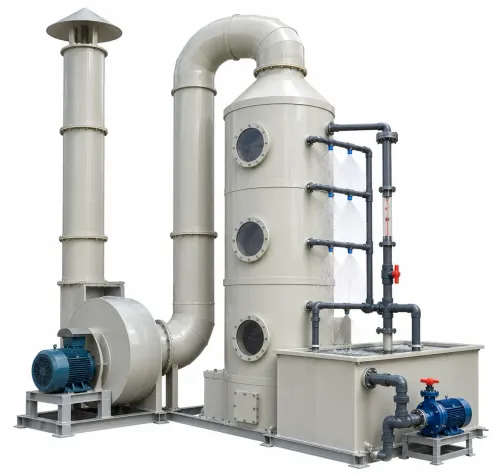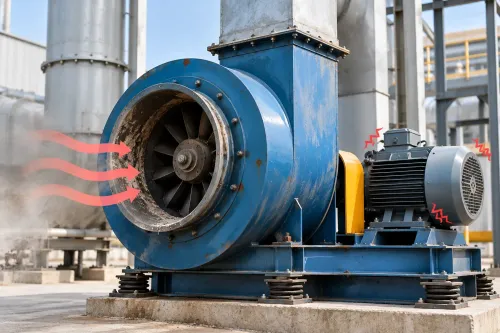
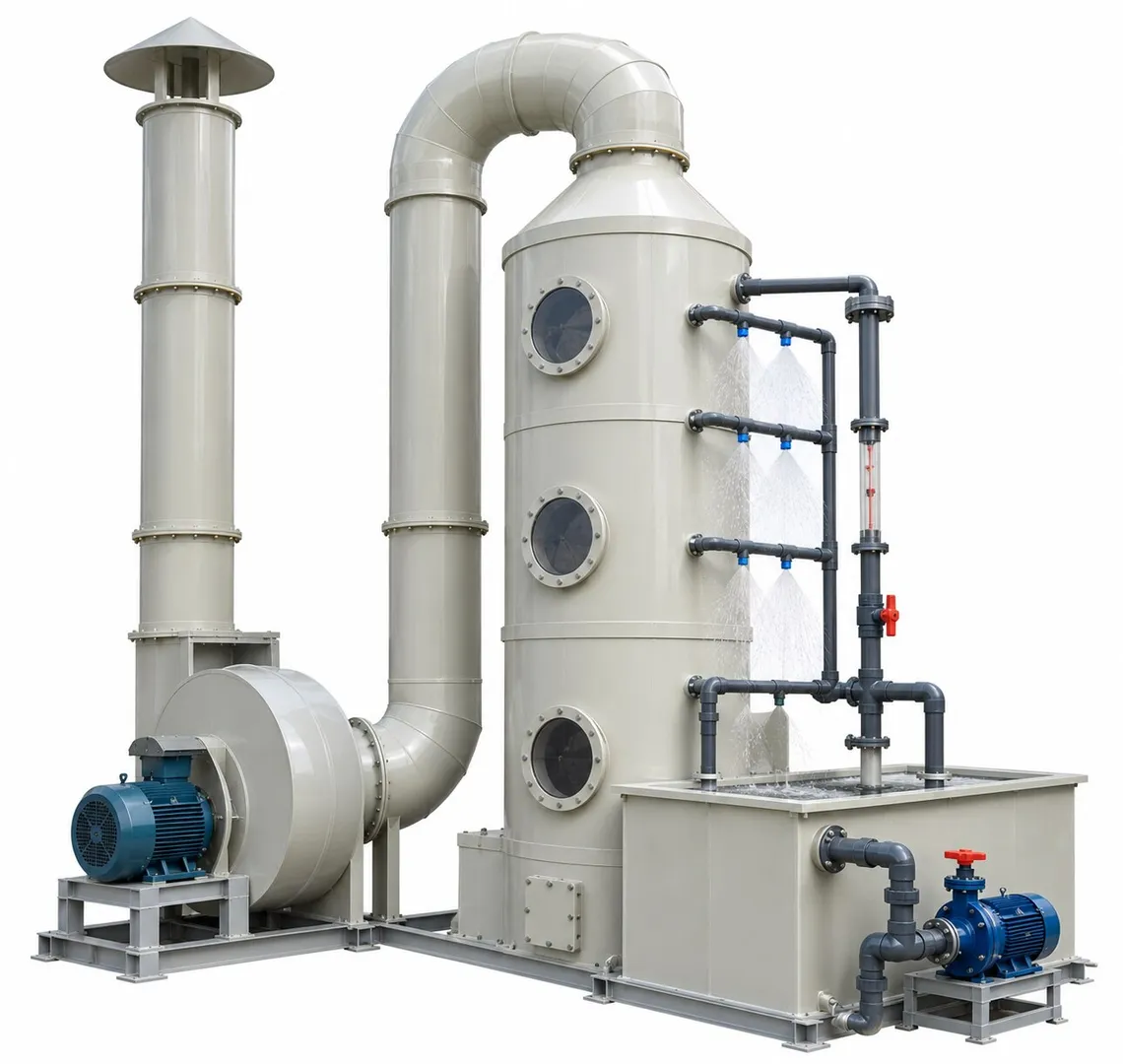
A wet scrubber earns its place when the pollutant, gas flow, operating schedule and discharge limit justify its water, chemical, energy and wastewater burden. By the end, you will be able to compare scrubber types with dry controls, estimate the full ownership cost and decide what evidence to demand before approving a factory installation.
Key takeaways
- Use wet scrubbers for soluble gases, absorbable chemicals and hot exhaust.
- Choose dry filtration for dry dust and poorly soluble solvent vapour.
- Request gas flow, temperature, moisture, pollutant and operating-hour data first.
- Price water, chemicals, pumps, wastewater treatment, maintenance and disposal—not just the unit.
Start with the pollutant, not the equipment
A wet scrubber makes financial and technical sense when the pollutant is water-soluble, chemically absorbable, or carried in hot exhaust where cooling adds value. Acid gases such as hydrochloric acid, sulfur dioxide and ammonia fit this case better than dry dust, solvent vapour or poorly soluble smoke.
Industrial wet scrubber benefits matter only when removal performance justifies the liquid-handling burden.
- Identify the pollutant and measure its concentration, airflow, temperature, moisture and operating hours. A high-volume process running continuously can justify capital equipment that a short, intermittent source cannot.
- Price the whole system: tower, fan, pump, ducting, civil and electrical work, water, reagent, pressure-drop energy, packing or nozzle replacement, corrosion repairs, monitoring and downtime.
- Add the disposal route. Scrubbing transfers contaminants into blowdown, wastewater or sludge containing dissolved metals, salts, reaction products and suspended solids; it does not destroy them.
- Test failure risks from chloride concentration, solids, scaling, plugging, biological growth and acid-dew-point condensation. Specify compatible materials, demister access and cleaning provisions.
- Compare the result with enclosure, dry collection or source reduction. In Delhi, judge the wet scrubber investment for industry against the plant’s consent conditions, emission limits and actual pollutant—not ambient-air reputation.
A low purchase price becomes expensive when the fan consumes excessive power, reagent use is high, or corrosion repeatedly stops production. A wet scrubber is the wrong financial choice when water, treatment capacity or disposal is constrained and the pollutant needs another control method.
Match the contaminant to the control technology
Choose the control by pollutant behaviour, not by the word “fume.” A wet scrubber suits water-soluble acid gases, alkaline gases and some mists, especially when hot exhaust needs cooling or combustible dust makes dry collection risky.
It is a poor match for dry bulk dust, poorly soluble solvent vapour, or a process that cannot tolerate wastewater, corrosion or pressure-drop energy.
| Option | Best match | Select another option when |
|---|---|---|
| Wet scrubber | Soluble gases, mists, hot or combustible exhaust | The pollutant is dry dust, poorly soluble VOC or wastewater is unacceptable |
| Baghouse | High-volume dry dust and particulate | The dust is wet, sticky, corrosive or explosive without suitable safeguards |
| Cartridge collector | Fine, dry dust at moderate airflow | Dust loading is heavy, abrasive or moisture causes blinding |
| Dry scrubber | Acid gas removal without liquid effluent | Cooling, high solubility or very high particulate capture is needed |
| Carbon unit | Low-concentration VOCs, odours and solvent vapours | The stream is hot, dusty, wet or heavily loaded |
| Thermal oxidiser | Concentrated combustible VOCs | Fuel use, variable flow or low VOC concentration makes oxidation uneconomic |
| Source enclosure | Fumes released at a process opening | Capture cannot be achieved through sealing and local exhaust |
A wet scrubber can be the right industrial exhaust cleaning system only if its circulation, pH, level, pressure drop and fan interlocks protect performance. Specify materials against the actual acids, chlorides, temperature and solids; scaling, plugging and corrosion can defeat removal efficiency before the stack test.
Specify the process data before choosing a scrubber design
Choose the scrubber configuration from measured contaminant loading, not from airflow alone. A representative emissions survey or process mass balance must cover minimum, normal and maximum production, including startup, high moisture and peak solids loading. Test only the cleanest run and you risk an undersized system.
Record these inputs before requesting a design:
- Gas flow in actual m³/h, temperature, humidity and pressure
- Each pollutant’s concentration in mg/Nm³ or ppm, mass rate in kg/h, solubility and required outlet limit
- Particle or mist size, solids loading, stickiness and expected liquid carryover
- Operating hours, batch changes, reagent strength, liquor pH, chloride level and scaling tendency
- Hood capture rate, enclosure leakage, duct velocity, fan capacity and available pressure drop
A fume scrubber for a factory in Delhi also needs commissioning data at all three production rates. The process hood may fail before the tower does.
| Configuration | Best fit | Main design warning |
|---|---|---|
| Packed-bed absorber | Soluble gases such as HCl, SO₂ and NH₃ | Dust and sticky mist plug the packing |
| Spray tower | Soluble gas or coarse particle loads with low pressure drop | Fine-particle capture is limited |
| Venturi scrubber | Fine particulate and mist requiring high collection efficiency | High pressure drop increases fan power |
| Cyclonic wet scrubber | Coarse dust and droplets before a final stage | It will not replace fine-particle control |
| Other configuration | Pre-separator, demister or two-stage system | Use it when solids, gas and mist loads conflict |
Select materials, demister access and cleaning provisions from the measured chemistry, not from the equipment name.
Calculate the ownership burden, not just the purchase price
Price the system as an annual ownership cost, not a tower quote. Divide installed capital by its expected service life, then add civil work, ducting, electrical panels, pumps, fans, controls and commissioning. A wet scrubber investment for industry is incomplete without these costs.
- Utilities: Calculate water intake, recirculation-pump electricity and fan electricity from the design flow and pressure drop. A venturi’s higher pressure drop can dominate the power bill.
- Chemicals: Multiply reagent consumption per operating hour by hours worked and current delivered cost, including storage and dosing equipment.
- Wastewater: Budget blowdown, neutralisation, dissolved-metal or salt treatment, sludge dewatering, testing and disposal. Captured pollutant moves into this stream; it does not disappear.
- Maintenance: Include nozzle and demister cleaning, packing replacement, pump seals, instruments, spares and planned inspections.
- Corrosion and scaling: Price suitable alloys, linings and replacement sections. Acid, chloride, solids and heat can make painted carbon steel a false economy.
- Monitoring: Include pH, flow, level, differential-pressure and outlet-emission instruments, calibration and records.
- Downtime: Multiply lost contribution margin per hour by installation outages, cleaning, plugging, corrosion repairs and unplanned shutdown hours.
Then compare the total with the cost of non-compliance, rejected product and lost production. Industrial wet scrubber benefits are strongest when reliable capture prevents expensive exposure or shutdowns; high water, reagent, wastewater or energy costs can erase that value. Forecast costs at low, normal and peak airflow rather than using one operating point.
Make the Delhi decision with operating and compliance evidence
The question “is industrial fume wet scrubber worth it in delhi” is answered by your DPCC consent conditions, applicable emission limits and measured contaminant load—not Delhi’s ambient-air reputation. A fume scrubber for factory in delhi is a poor purchase if dry dust is dominant or the wastewater route is unresolved.
1. Before buying, obtain the Consent to Establish and Consent to Operate, emission limits, stack requirements and production conditions from the Delhi Pollution Control Committee. Compare them with a representative emissions survey or process mass balance covering concentration, airflow, operating hours and peak production.
2. Require a design basis naming the liquor chemistry, removal target, gas temperature, solids loading, pressure drop, materials of construction and demister. Check corrosion, scaling, plugging and biological-growth controls; painted carbon steel is not automatically suitable for acidic or alkaline liquor.
3. Put instruments and interlocks in the specification: recirculation flow, liquor level, pH or reagent concentration, differential pressure and fan status. Link production to circulation and fan operation so a failed scrubber cannot become an uncontrolled emission source.
4. Commission at minimum, normal and maximum production rates, including startup and high-moisture conditions. Retain stack-test results, calibration records and maintenance logs.
5. Approve blowdown, wastewater treatment and sludge disposal before installation. Captured metals, salts and reaction products leave through liquid or sludge, not through disappearance.
R K Industries Delhi should be asked for these operating records and test conditions, not just tower dimensions or fan capacity.
Related products
RK Industries: Industrial Fumes Wet Scrubber – Efficient Air Pollution Control At RK Industries, we are dedicated to helping industries create a... View product → |
 | RK Industries: Acid Fumes Scrubber – Protecting Your Environment and Ensuring Clean Air At RK Industries, we understand the importance of maintaining... View product → |
Frequently asked questions
When is an industrial wet scrubber worth the investment?
It is worth assessing when the exhaust contains water-soluble or chemically absorbable pollutants, or when cooling hot gas adds process value. Hydrochloric acid, sulfur dioxide and ammonia suit wet absorption better than dry dust, solvent vapour or poorly soluble smoke.
What information is needed before selecting a wet scrubber design?
Collect exhaust flow rate, temperature, moisture content, pollutant concentration, particle loading, operating hours, pressure-drop limits and the required outlet emission level. Also identify available water, chemical storage, wastewater handling and electrical capacity.
What costs should you include in a wet scrubber investment?
Include the scrubber, fan and ductwork, pumps, tanks, nozzles, mist eliminator, controls, water, reagent, electricity, wastewater treatment, sludge disposal, spares, cleaning and downtime.
How can a Delhi factory validate its wet scrubber decision?
Compare the design with operating data, stack-test results, water and chemical records, pressure-drop readings, maintenance logs and the applicable consent conditions issued by the Delhi Pollution Control Committee.
Keywords